
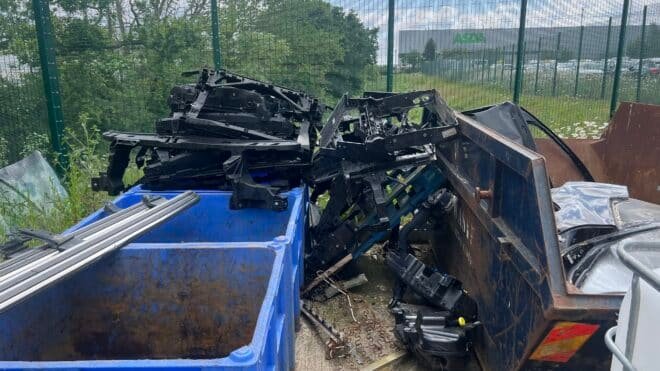
Automotive plastic recycling UK is the regulated, multi-stage process by which plastic components from End-of-Life Vehicles (ELVs) are collected, sorted by polymer type, cleaned, and converted into reusable raw materials. This process is carried out by licensed Authorised Treatment Facilities (ATFs) operating under the End-of-Life Vehicles Regulations 2003, enforced by:
- The Environment Agency in England.
- The Scottish Environment Protection Agency (SEPA) in Scotland.
- Natural Resources Wales (NRW) in Wales.
UK law requires that 95% of every scrapped vehicle must be recovered, and at least 85% of that must be genuinely recycled or reused by weight – not simply burned for energy.
In plain terms: the plastics inside your car should follow a clearly defined recycling path. Whether that actually happens depends entirely on which facility processes them – and how seriously that facility takes plastic recovery.
UK Automotive Plastic Recycling at a Glance
- Approximately 1.4 to 1.6 million vehicles are scrapped in the UK every year.
- A modern car contains 150–222 kg of plastic across more than 23 different polymer types.
- Plastic makes up roughly 10–12% of a car’s total weight but up to 50–70% of its internal volume.
- The UK vehicle recycling sector was valued at $2 billion in 2024, projected to reach $3.1 billion by 2033 (IMARC Group).
- UK law mandates a 95% total vehicle recovery rate and an 85% recycling and reuse rate by weight.
- More than 900,000 tonnes of plastic from ELVs across the UK and EU ends up in landfill or incineration each year (MBA Polymers UK).
- Recycling one tonne of polypropylene saves 75–86% in carbon emissions compared to producing virgin PP from crude oil (Carbon Trust / MBA Polymers UK).
How Much Plastic Is Actually in a Car?
Most people picture cars as metal machines – steel frames, aluminium panels, copper wiring. Step inside any modern vehicle and look more carefully. Almost every surface you touch, sit on, or look at is plastic.
Research published in the journal Energies, which analysed six vehicles across different segments and model years, found that the average car contains 222 kg of plastic, representing roughly 17.7% of total vehicle weight. Nearly half of that – approximately 105 kg – sits in components weighing more than 1 kg each, making them the primary targets for automotive plastic recycling.
The European Recycling Industries’ Confederation (EuRIC) confirms that plastic is the second most commonly used material in vehicles after metals, and that the automotive sector is the third largest consumer of plastic in European manufacturing.
How Plastic Content in Vehicles Has Grown
Car manufacturers have increased the proportion of plastic in vehicles steadily and deliberately across five decades:
| Era | Approximate Plastic Content |
| 1970s vehicles | ~5% of total vehicle weight |
| 2000s vehicles | ~10–12% of total vehicle weight |
| Modern combustion cars | 10–17% by weight; 50–70% of internal volume |
| Electric vehicles | Higher still – battery casings, thermal systems, and CFRP composite structures increase the polymer load significantly |
The reason behind this growth is straightforward. Research cited by EuRIC and the European Commission shows that reducing a vehicle’s weight by just 10 kg cuts approximately 1 g/km of CO₂ emissions – roughly 480 kg of CO₂ avoided over a full vehicle lifetime. For manufacturers chasing fuel economy regulations, plastic is the lightest practical material for dozens of applications where metal once dominated.
The Main Plastic Parts in Your Car – and What They Weigh
A mid-sized UK family car contains the following key plastic components. Each one becomes a target for automotive plastic recycling at end of life:
Exterior components:
- Front and rear bumper assemblies – typically 8–10 kg each, primarily Polypropylene (PP).
- Wheel arch liners and underbody shields – approximately 4–6 kg, PP.
- Door mirror housings – approximately 1–2 kg, ABS or PP.
- Front grille and splitter trim – approximately 1–3 kg, ABS.
Interior components:
- Dashboard and instrument panel – approximately 7–9 kg, typically ABS, PP, or polyphenyl ether (PPE) blended compounds.
- Door trim panels and pocket liners – 5–7 kg combined, PP or PP/ABS.
- Headlining and pillar trims – 3–5 kg, fabric-backed PP.
- Centre console and trim – 2–4 kg, ABS or PP.
- Seat structures and foam padding – 15–20 kg combined, largely polyurethane (PU) foam over PP frames.
Under-bonnet and structural:
- Fuel tank – approximately 6–8 kg, high-density polyethylene (HDPE).
- Battery casing (traditional 12V) – 2–3 kg, polypropylene.
- Engine cover, air intake ducts, and coolant reservoir – 4–6 kg combined, polyamide (PA/nylon) or PP.
- Wiring harness insulation – approximately 5–8 kg spread throughout the vehicle, PVC.
Glazing and lighting:
- Headlight lenses and housings – 1–2 kg per unit, polycarbonate (PC) lens with ABS housing.
- Side window seals and glazing strips – 1–2 kg, EPDM rubber and PVC.
Bodyshop owners: Every bumper, dashboard, or trim panel you remove during a repair has a documented UK recycling route. Whether that material is properly recovered or ends up in a general skip depends entirely on how it is managed from your site. Request a free collection for your automotive plastic waste
The Polymer Diversity Problem – Why Car Plastic Recycling Is Genuinely Difficult
A modern car contains up to 39 different types of basic plastics and polymers. The four most common – PP, polyurethane, polyamide, and PVC – account for only about 74% of all plastic used. The remaining 26% spans dozens of specialist grades, blends, and composites.
According to EuRIC, the distribution of the most common automotive polymers by weight is:
- Polypropylene (PP) – 35%: bumpers, interior trims, battery casings, and floor coverings.
- Polyurethane (PU) – 19%: foam seating, insulation panels, and suspension bushings.
- Polyamide/Nylon (PA) – 11%: brake hoses, oil sumps, battery casings, and under-bonnet components.
- PVC – 9%: instrument panels, electrical cables, pipes, and door sealants.
- ABS: dashboards, grilles, interior hard trim, and steering column shrouds.
- Polycarbonate (PC): headlight lenses, instrument binnacles, and security screens.
- HDPE: fuel tanks, coolant reservoirs, and underbody elements.
- EPDM/TPO (thermoplastic olefin): bumper extensions, flexible trim, and wheel arch surround seals.
The critical problem is that these polymers cannot be melted together. Each has a different melting point, a different chemical structure, and different mechanical properties. Mixing PP with ABS produces a brittle, discoloured, commercially worthless output. This is why sorting is the most expensive and most consequential step in the entire automotive plastic recycling process – and why facilities that rush it or skip it end up sending plastic to incinerators rather than back into production.
The EV Complication: A Growing Challenge for UK Recyclers
The first generation of mass-market electric vehicles sold from around 2017 onwards is approaching end-of-life in meaningful numbers. By 2027–2032, UK ATFs will be processing significantly more ELVs from models including the Nissan Leaf, BMW i3, Renault Zoé, and Volkswagen ID range – vehicles that introduce polymer challenges the existing infrastructure was not designed for.
Here is what makes EV plastic recycling harder than processing a standard combustion vehicle:
- Battery module housing uses specialist engineering-grade polymers bonded directly to metal cell components – a combination that resists standard mechanical separation.
- Carbon fibre reinforced polymers (CFRP), used in structural reinforcements of premium EVs from BMW and Audi, have no commercially viable UK recycling route at automotive scale. CFRP cannot be mechanically recycled without destroying the fibre structure. Pyrolysis can recover the carbon fibre, but with a 20–30% reduction in mechanical performance, and the resin matrix is lost entirely.
- Specialist engineering polymers in thermal management and charging systems are material grades that standard ATF processing equipment is not calibrated to identify or handle.
The European Automobile Manufacturers’ Association (ACEA) acknowledged this directly in its 2023 position paper, noting that materials used to reinforce plastic parts in newer vehicles “are challenging to recycle and can contaminate waste streams.” UK ATFs are developing EV-specific protocols, but the technical and regulatory frameworks are still catching up with the incoming material reality.
The UK Regulatory Framework: What the Law Requires
The End-of-Life Vehicles Regulations 2003
The End-of-Life Vehicles Regulations 2003 is the primary UK legislation governing how scrapped cars are handled. It transposed the EU’s ELV Directive 2000/53/EC into UK law, and the UK has retained and enforced this legislation independently since Brexit.
The five core legal requirements are:
- 95% total recovery rate – At least 95% of every scrapped vehicle’s weight must be reused, recycled, or recovered, covering metals, fluids, glass, rubber, and plastics.
- 85% recycling and reuse rate – Of that 95%, at least 85% must be genuinely recycled or reused as material. Energy recovery from incineration counts toward the 95% total but not toward the 85% recycling target.
- Mandatory depollution – All hazardous materials – fluids, batteries, airbag pyrotechnics, and refrigerants – must be removed before any further processing begins.
- Free vehicle take-back – Manufacturers and importers must provide free take-back points for ELVs. The last registered owner is entitled to dispose of their vehicle at no cost through an authorised facility.
- Certificate of Destruction (CoD) – Every scrapped vehicle must be issued a CoD by the processing ATF and registered electronically with the DVLA.
These requirements carry genuine enforcement weight. Under the Environmental Permitting (England and Wales) Regulations 2016, operating a vehicle recycling facility without the correct permit is a criminal offence. The Environment Agency can issue:
- Civil sanctions and monetary penalties.
- Suspension notices halting facility operations.
- Prosecutions leading to unlimited fines or custodial sentences for serious or repeat breaches.
What Is an Authorised Treatment Facility (ATF)?
An Authorised Treatment Facility (ATF) is a vehicle recycling facility holding a formal environmental permit from the Environment Agency, SEPA, or NRW. Not every scrapyard is an ATF. Not every business advertising car buying is legally authorised to process end-of-life vehicles.
To operate legally as an ATF, a facility must meet all of the following requirements:
- Hold an environmental permit under the Environmental Permitting (England and Wales) Regulations 2016, specifically covering vehicle treatment activities.
- Maintain a purpose-built depollution area with impermeable flooring, full drainage capture, and separate containment tanks for different fluid types.
- Carry a scrap metal dealer’s licence under the Scrap Metal Dealers Act 2013 – which also banned cash payments for scrap vehicles. All payments must now be made by bank transfer or cheque.
- Keep complete records of every ELV received, its full treatment history, and all materials recovered from it.
- Be registered on the DVLA’s electronic Certificate of Destruction system.
Quality varies considerably across the UK ATF network:
- Some facilities invest heavily in polymer sorting equipment and achieve close to 90% or above in true material recycling.
- Others shred everything together and route the mixed output to energy-from-waste facilities – technically meeting the 95% recovery target while barely addressing the 85% plastic recycling requirement.
How to Verify an ATF Before Scrapping Your Car
Most UK drivers never check whether their chosen facility is properly authorised. Doing so takes five minutes and protects both the environment and your legal standing.
Follow these four steps:
- Search the Environment Agency’s public register at environment.data.gov.uk – filter by postcode or facility name and look for an active permit listed under “vehicle treatment.”
- Cross-reference with the DVLA’s list of authorised scrap metal dealers for a second confirmation.
- Ask the facility directly for its Environment Agency permit number. A legitimate ATF will provide this without any hesitation.
- Ensure you receive a Certificate of Destruction only after processing is complete – not before, and never as a vague future promise.
Watch out for these red flags before committing:
- Facilities offering cash payment – illegal under the Scrap Metal Dealers Act 2013.
- Operators with no fixed physical premises and only a mobile number.
- Any reluctance to provide an Environment Agency permit number when asked directly.
- A Certificate of Destruction promised “later by email” with no specific date or reference number.
- Unusually high price offers that seem completely disconnected from the vehicle’s actual condition or scrap metal value.
The Post-Brexit Regulatory Landscape
Since leaving the EU, the UK now enforces its own ELV framework independently – and a meaningful gap is opening up between UK and EU requirements.
What the EU has done:
The EU finalised its new End-of-Life Vehicles Regulation in early 2026. Key changes directly relevant to automotive plastic recycling include:
- A minimum 15% recycled plastic content requirement in new vehicles, phasing in over six years and rising to 25% after ten years.
- At least 20% of that recycled content must come specifically from post-consumer ELV-derived materials – not simply from clean manufacturing scrap.
- Mandatory Vehicle Circularity Passports – digital records for each vehicle documenting polymer types, coating systems, recycled content percentages, and recommended processing steps at end of life.
What the UK is currently doing:
- The UK government ran an ELV Review consultation in 2024 examining whether to introduce Extended Producer Responsibility (EPR) for automotive plastics.
- If enacted, EPR would require car manufacturers selling in the UK to fund end-of-life plastic processing costs – shifting the economic burden away from recyclers who currently absorb it.
- Industry bodies including the British Metals Recycling Association (BMRA) and the Vehicle Recyclers’ Association (VRA) have both pushed EPR as the most effective lever for making quality automotive plastic recycling economically stable, independent of crude oil price movements.
The Four Key Stages of Automotive Plastic Recycling UK
The difference between a high-performing ATF and an average one comes down to how thoroughly each of these four stages is executed. Understanding the process also helps bodyshops and workshops see why the condition and segregation of plastic waste at source directly affects the quality of what can ultimately be recovered.
Stage 1: Depollution and Dismantling
What happens: Every end-of-life vehicle must be fully depolluted before any recycling begins. Under Schedule 1 of the ELV Regulations, ATFs must remove and safely capture all of the following:
- Engine oil, gearbox oil, transmission fluid, and differential oil.
- Brake fluid, hydraulic fluid, and power steering fluid.
- Coolant and antifreeze.
- Petrol or diesel fuel – including residual fuel in the tank before the tank itself is removed as an HDPE plastic component.
- Air conditioning refrigerant (R134a or R1234yf) – both require certified recovery equipment and qualified operatives.
- Windscreen washer fluid and shock absorber fluid.
- The 12V lead-acid battery (or, in EVs, the high-voltage traction battery, which requires entirely separate handling protocols).
- Airbag inflator pyrotechnics and seatbelt pre-tensioners – these contain explosive charges and must be removed or safely deployed under controlled conditions.
- Mercury-containing components in older vehicles, including certain dashboard switches and interior lighting units.
Only once all of the above are accounted for, documented, and stored separately can dismantling legally begin. This is the statutory order of operations – not simply a recommended sequence.
Why depollution directly matters for plastic recycling quality:
- A fuel tank that has not been properly drained contains residual hydrocarbon contamination embedded in the HDPE.
- Coolant-soaked underbody plastic components carry chemical residue that disrupts downstream washing processes.
- Brake fluid exposure degrades the surface properties of certain polymer types.
- Proper depollution is not just a safety step – it is a quality preservation measure for every plastic component that follows.
After depollution, valuable plastic components are removed manually before the hulk enters the shredder:
- Front and rear bumpers – removed whole and placed in a dedicated PP or ABS stillage for specialist collection and car bumper recycling.
- Dashboard and instrument panel – removed as a complete assembly to preserve the higher polymer grades contained within it.
- Fuel tank – removed whole and sent to a specialist HDPE processor.
- Door cards and interior trim – stripped for direct reuse if undamaged, or directed to polymer recovery.
- Headlight assemblies – separated into PC lens and ABS housing streams for specialist processing.
The parts grading system used by quality ATFs:
| Grade | Condition | Outcome |
| Grade A | Undamaged and functionally viable | Sold directly for reuse in the second-hand parts market |
| Grade B | Minor damage but repairable | Refurbished before resale |
| Grade C | Damaged beyond reuse value | Directed to material-only recycling |
A Grade A bumper from a common UK model – a Ford Focus, Vauxhall Astra, or Volkswagen Golf – can fetch £50–£150 on the used parts market. Selling it directly keeps it out of the shredder entirely and generates more value than any downstream recycling route.
Stage 2: Sorting by Polymer Type
What happens: Recovered plastics must be separated by polymer type before processing. Mixing different polymers – even ones that look visually identical – produces a contaminated, degraded material that no manufacturer will purchase.
A car bumper may look like a single piece of black plastic, but it typically consists of:
- A PP main shell forming the primary structural layer.
- TPO extensions at the lower corners, which flex differently to the rigid PP shell.
- A foam impact absorber bonded to the inner face.
- Metal mounting brackets pressed directly into the plastic structure.
- A full automotive paint system – adhesion promoter, primer, colour basecoat, and clearcoat – that must be addressed before recycling can produce a clean output.
Three main sorting methods are used in UK automotive plastic recycling:
- Manual sorting:
- Operatives identify parts using the ISO 11469 polymer resin code stamped on the reverse of a component.
- A >PP< code means polypropylene; >ABS< means ABS; >HDPE< means high-density polyethylene.
- Key limitation: only around 60% of automotive plastic parts carry a clear polymer identification code. The remaining 40% require either trained guesswork or expensive laboratory testing.
- NIR optical sorting (near-infrared spectroscopy):
- NIR sensors emit near-infrared light and measure how different materials absorb and reflect specific wavelengths.
- Each polymer has a unique NIR fingerprint, allowing machines to identify types in milliseconds.
- Modern systems from TOMRA and Pellenc ST – both with UK facility installations – process material at 3 tonnes per hour or more, identify over 20 polymer types, and trigger pneumatic air jets to deflect materials into separate collection streams.
- Density separation (float-sink tanks):
- PP has a density of approximately 0.90 g/cm³ – it floats in water.
- ABS has a density of approximately 1.05 g/cm³ – it sinks.
- Running shredded plastic through a water tank separates the two streams without energy-intensive equipment, making this an effective and low-cost first stage for PP/ABS separation at UK facilities.
The multi-material assembly problem:
Door panels combine a PP or ABS substrate, a polyurethane foam layer, a textile or vinyl surface covering, and metal clips or fasteners. Before the base plastic can enter the recycling stream, all these layers must be mechanically separated. Many facilities skip this step – resulting in contaminated output that degrades the market value of an entire processed batch.
Stage 3: Shredding, Granulation, and Washing
What happens: Sorted plastic components are mechanically reduced in size and cleaned to produce plastic flake ready for re-melting.
The size reduction process:
- Shredders use rotating cutting blades to reduce bumpers, dashboards, and door panels to pieces of approximately 10–30 mm.
- Granulators further reduce this material to a flake size of 3–8 mm.
- Smaller, more consistent flake produces more uniform washing results and higher-quality final pellets.
What the washing process must remove from every piece of automotive plastic:
- Paint and coatings – every exterior automotive plastic is painted with a system engineered to bond permanently to the substrate. It does not dissolve in water.
- Adhesive residues – from foam backing, assembly sealants, and label adhesives bonded during original manufacture.
- Road dirt and contamination – particularly significant on underbody and wheel arch components.
- Surface treatment agents – including flame retardants, UV stabilisers, and plasticisers introduced during original manufacture.
Two main washing technologies are deployed at UK automotive plastic recycling facilities:
| Method | How It Works | Best For | Limitation |
| Friction washing | Flakes tumbled against each other and drum walls; water circulated continuously |
Lightly contaminated material; energy-efficient | Less effective on bonded adhesives and heavy paint |
| Hot-wash systems | Wash water heated to 60–80°C; softens adhesives and paint |
Bonded foams, solvent-based adhesives | Higher energy consumption and cost per tonne |
For heavily painted exterior plastics such as bumpers, neither system achieves complete paint removal. This is a known and significant limitation of current mechanical recycling technology – and one of the primary reasons why chemical recycling is gaining investment attention.
Stage 4: Pelletising, Quality Testing, and Re-Manufacturing
What happens: Clean plastic flake is fed into an extruder, melted, forced through a die under pressure, cooled in a water bath, and cut into uniform pellets of typically 3–5 mm diameter. These pellets – labelled as rPP, rABS, or rHDPE – are the traded commodity sold to manufacturers.
Quality testing parameters assessed by UKAS-accredited labs including Intertek:
- Melt flow index (MFI) – measures how easily the melted polymer flows under standard pressure. Critical for injection moulding manufacturers who need predictable processing behaviour.
- Tensile strength and elongation at break – mechanical properties that must meet minimum OEM specifications before pellets can return to automotive use.
- Impact resistance – particularly important for bumper, door panel, and structural trim applications.
- Colour consistency – recycled automotive PP tends toward grey or dark tones from residual paint contamination.
- Contaminant levels – including heavy metals, halogens from PVC contamination, and moisture content.
According to research published in PMC (National Library of Medicine), mechanically recycled automotive PP typically retains 80–85% of the tensile strength of virgin PP.
What the recycled pellets are used for:
- New wheel arch liners and underbody shields – a semi-closed loop where automotive plastic returns to automotive use.
- Battery trays and electrical component housings.
- Garden furniture and outdoor storage containers.
- Industrial packaging and returnable transit containers.
- Agricultural pipes and fluid handling systems.
MBA Polymers UK, operating its dedicated facility in Wimblington, Cambridgeshire, produces RecyClass-certified rPP and rABS carrying the Carbon Trust’s Low CO₂ label. Their process achieves carbon savings of 75–86% compared to virgin plastic production. Several major automotive OEMs have already switched to using this output in new vehicle components.
Which Car Plastic Parts Can and Cannot Be Recycled in the UK?
Not all automotive plastic follows the same recycling path. Understanding which parts have established UK routes – and which face real barriers – helps drivers, bodyshops, and workshops make better decisions about how plastic waste is managed and which vehicles merit closer scrutiny when choosing an ATF.
Parts That Are Routinely Recycled in the UK
| Part | Polymer | Recyclable in UK? | Output use |
| Front and rear bumpers | PP / PP+EPDM | Yes | rPP pellets → wheel liners, new bumpers |
| Fuel tanks | HDPE | Yes | rHDPE → drainage pipes, containers |
| Door cards and interior trim | PP / ABS | Yes | rPP / rABS pellets → technical parts |
| Headlight lenses | PC | Yes | rPC → glazing, electronics |
| Wheel arch liners | PP / PP-talc | Yes | rPP pellets → automotive and general use |
| Wiring insulation (PVC) | PVC | Limited | Specialist wire recyclers only |
| PU foam (seat cushions) | Polyurethane | Limited | Rebonded carpet underlay |
| Multi-layer headliners | PP + foam + textile | No viable route | Energy-from-waste (ASR) |
| CFRP components | Carbon fibre thermoset | No viable route | Energy-from-waste |
| Bitumen sound deadening | Bitumen-polymer composite | No viable route | Energy-from-waste |
Polypropylene (PP) bumpers are the flagship recyclable automotive plastic in the UK. PP is a thermoplastic that can be melted and reprocessed multiple times. It carries the >PP< or >PP+EPDM< resin code on the inner face and has established UK supply chains – including dedicated car bumper collection services – routing it to specialist processors.
HDPE fuel tanks are highly recyclable. Tanks should be removed whole, drained of residual fuel, and sent to a specialist HDPE processor. The output material is used in drainage pipes, agricultural containers, and industrial packaging.
PP and ABS interior trims – door cards, console panels, and pillar trim – are processed routinely by facilities that separate interior plastics before shredding. ABS requires its own dedicated stream and cannot share a processing line with PP without contaminating both outputs.
Headlight assemblies – polycarbonate lens and ABS housing – are processed by specialist optical recyclers who separate the two distinct materials. Recycled PC from headlight lenses is a higher-value material used in glazing and electronics applications.
Wheel arch liners and underbody shields – PP or PP/talc composites – are among the most straightforward automotive plastic components to process once removed from the vehicle.
Parts With Limited or No Current UK Recycling Route
PVC wiring insulation is technically recyclable, but automotive PVC is a thin coating over copper wire requiring specialist separation equipment. Some UK wire recyclers process automotive harnesses, but the PVC fraction is often downcycled or sent for energy recovery rather than material recycling.
Polyurethane foam from seat cushions, headrests, and acoustic insulation has limited UK recycling routes. PU can be mechanically ground and rebonded into carpet underlay and acoustic padding, but at high energy cost and low recovered material grade.
Multi-layer composite panels – including fabric-backed headliners combining PP substrate, acoustic foam, and textile covering – are extremely difficult to separate. These are typically shredded into automotive shredder residue (ASR), most of which goes directly to energy-from-waste.
Carbon fibre reinforced polymers (CFRP) have no commercially viable UK recycling route at automotive scale. The thermoset resin matrix cannot be melted or reformed. Pyrolysis can recover carbon fibre, but at a 20–30% reduction in mechanical performance. Specialist research at UK universities including Loughborough and Nottingham is progressing, but commercial-scale solutions remain several years away.
Bitumen-backed sound deadening mats are a bitumen-polymer composite that cannot be mechanically separated from either component. These are almost universally directed to energy-from-waste.
Contamination: The Real Gap Between What Could Be Recycled and What Is
The bigger challenge in UK automotive plastic recycling is not which materials are theoretically recyclable – it is how contamination degrades materials that should be perfectly recyclable in practice.
The three dominant contamination sources are:
- Paint and coatings. Every exterior plastic surface is painted with an adhesion promoter, primer, colour basecoat, and clearcoat – all engineered to bond permanently to the substrate. In mechanical recycling, this paint becomes a contaminant in the polymer melt, creating dark streaks, reducing transparency, and introducing PU chemistry from clearcoats into what should be a clean PP stream.
- Adhesives and foam backing. Door panels and roof liners are assembled with bonded foam layers and sealant adhesives that standard washing processes cannot remove. These contaminate the melt and produce brittle, inconsistent pellets that most manufacturers reject outright.
- Brominated flame retardants. Added to interior plastics for fire safety compliance, these legacy hazardous substances contaminate the recycled output and may restrict its permitted end uses under applicable waste and product regulations.
These are solvable engineering problems. Chemical recycling and advanced de-coating technologies are beginning to address them. But they explain clearly why the UK’s true automotive plastic recycling rate sits well below the headline 85% recovery target that the legislation sets.
Recycling Methods Compared: Mechanical, Chemical, and Thermal
Mechanical Recycling: The Current UK Standard
Mechanical recycling covers the physical stages described above – shredding, sorting, washing, and pelletising – without chemically altering the polymer structure. Molecular chains are melted and reformed, but not broken down.
Strengths of mechanical recycling:
- Well-established technology with decades of operational refinement across UK and European facilities.
- Lower cost per tonne than all chemical recycling alternatives.
- Suitable for clean, well-sorted PP and ABS streams.
- Can approach virgin material performance when input quality is properly controlled.
Limitations of mechanical recycling:
- Output quality degrades by approximately 15–20% in tensile strength per recycling cycle, limiting how many times the same material can be usefully reprocessed.
- Cannot adequately handle heavily contaminated or mixed-polymer material.
- Paint contamination is only partially addressed by current washing technology, creating a quality ceiling for exterior plastic streams.
UK status: Mature and commercially deployed across England and Scotland as the dominant automotive plastic recycling method.
Chemical Recycling: The Emerging Disruptor
Chemical recycling breaks plastics down at a molecular level – not simply melting the polymer chains, but actively breaking them down. The output can be new polymer feedstock, fuel, or chemical intermediates. Three approaches are relevant to UK automotive plastic streams:
- Pyrolysis:
- Plastic is heated in the absence of oxygen, breaking polymer chains into hydrocarbon oils, gases, and solid char.
- The output oil can fuel industrial processes or serve as chemical feedstock for new plastic production.
- Recycling Technologies (Swindon) operates the most significant UK example: their RT7000 machine processes mixed and contaminated plastic waste – including automotive fractions – into Plaxx hydrocarbon oil. It handles heavily painted plastics and multi-material laminates that mechanical recycling cannot address.
- Solvent-based dissolution:
- A target polymer is selectively dissolved from a mixture, filtered to remove contaminants including paint particles and flame retardants, then re-precipitated at near-virgin quality.
- BASF’s ChemCycling programme and CreaSolv technology have demonstrated this approach for automotive ABS.
- UK commercial pilots are expected between 2026 and 2028.
- Depolymerisation:
- Reverses the original polymerisation reaction, producing monomers for making entirely new plastic with identical properties to virgin material.
- Works well for PET, but remains technically challenging for polyolefins – PP and PE – that dominate automotive plastic streams.
The honest position on chemical recycling in the UK: The technology works. Commercially viable deployment at automotive plastic scale does not yet exist sector-wide. Chemical recycling will complement mechanical recycling – handling contaminated, mixed fractions that mechanical processing cannot manage – rather than replacing it. They are sequential solutions to different parts of the same problem.
Thermal Recovery: The Last Resort
Energy-from-waste (EfW) incineration of automotive plastic counts toward the 95% total vehicle recovery target. It does not count toward the 85% recycling and reuse target.
When automotive plastic reaches an EfW facility:
- The polymers are burned to generate heat and electricity.
- The material value – built from energy-intensive petrochemical production – is permanently destroyed.
- The carbon stored in the plastic is released as CO₂.
- The only benefit is avoided landfill and a modest energy return.
MBA Polymers UK estimates that more than 900,000 tonnes of plastic from scrapped cars across the UK and EU goes to landfill or incineration annually. Diverting even a significant fraction of this to quality recycling would deliver enormous carbon, economic, and resource benefits. EfW should be what the law describes it as – the last resort, not the default destination for difficult plastics.
The Four Biggest Challenges in UK Automotive Plastic Recycling
These four structural challenges explain why a gap exists between what the system is legally required to deliver and what consistently happens in practice across UK ATFs.
Challenge 1: The Polymer Labelling Gap
Only around 60% of automotive plastic parts carry clear ISO 11469 polymer identification codes. For the rest – parts with no marking, or markings obscured by paint, adhesives, or physical damage – correct identification requires one of two costly alternatives:
- Trained manual inspection – carries a meaningful error rate in practice, particularly for unlabelled interior components.
- NIR spectroscopic testing – accurate but adds cost and processing time for every unidentified component.
The consequences of misidentification:
- Misidentified parts enter the wrong recycling stream.
- A single contaminated batch reduces the market value of the entire processed volume.
- In worst cases, contaminated mixed streams are downgraded from material recycling to energy-from-waste.
Better polymer labelling practice on new vehicles is encouraged by the British Plastics Federation, but consistent enforcement across all manufacturers selling in the UK remains limited.
Challenge 2: Paint and Coating Removal
Every exterior plastic part is painted with a system specifically designed to last the full vehicle lifetime – resistant to UV radiation, chemical exposure, physical abrasion, and temperature cycling. It is extremely effective at its job. And it must be removed before clean recycling can produce a marketable output.
Current washing systems remove a significant proportion of contamination but not all of it. Residual paint creates colour variation and reduces the mechanical performance of recovered pellets.
Emerging solutions under development:
- Laser ablation – precisely removes paint from plastic surfaces without affecting the base polymer. High capital cost and slow throughput currently limit commercial viability at the scale required for large-volume bumper processing.
- Cryogenic grinding – chilling plastic to temperatures at which the paint becomes brittle and fractures away from the substrate. Effective for some applications but energy-intensive at commercial volume.
Until a cost-effective, scalable de-coating solution is deployed across UK automotive plastic processing, paint contamination will continue to limit both the quality and market price of recovered automotive PP and ABS.
Challenge 3: Virgin Plastic Economics
Polypropylene is a petrochemical product. Its price tracks crude oil. When oil prices fall, virgin PP becomes cheaper – sometimes cheaper per tonne than recycled PP, despite the recycled material representing a recovered resource rather than a newly extracted one.
The structural problem this creates:
- ATFs and specialist recyclers that invest in quality sorting, washing, and pelletising equipment to produce high-grade rPP can find their market undercut whenever global oil prices fall.
- Without a price floor, a minimum recycled content mandate, or a tax mechanism that accounts for the environmental cost of virgin production, the economics of quality automotive plastic recycling remain chronically unstable.
- This is exactly why the UK government’s EPR consultation in 2024 was framed as a structural market intervention rather than a technical standard.
Challenge 4: EV Batteries and Advanced Composites
The incoming wave of end-of-life electric vehicles brings both new material volumes and new processing complexity.
The opportunity: EVs contain more PP, ABS, and engineering-grade polymers in thermal management systems, charging infrastructure, and battery packaging – increasing the recyclable polymer yield per vehicle compared to equivalent combustion models.
The challenge:
- High-voltage traction batteries dominate the ELV process for BEVs. Their polymer casings are bonded to metal and ceramic cell components in ways that resist standard mechanical separation techniques.
- CFRP structural components in premium EVs from BMW, Audi, and Jaguar Land Rover face ATFs with no viable UK recycling option – these almost certainly end up in energy-from-waste.
- The rate of EV arrivals at end-of-life will accelerate sharply between 2027 and 2032, giving the UK recycling sector a limited window to develop the infrastructure and protocols these vehicles require.
Technologies Transforming UK Automotive Plastic Recycling
AI-Enhanced NIR Optical Sorting
The latest NIR installations use machine learning models trained on millions of material samples to improve identification accuracy for contaminated streams where pure spectroscopic signatures are partially obscured by coatings or blended materials.
What the best current NIR systems achieve:
- Identification of over 20 distinct polymer types on a single conveyor line.
- Processing throughput of 3 or more tonnes per hour.
- Identification accuracy below 2% error rate per polymer stream.
- Detection and separation of flame-retardant-containing ABS from standard ABS, based on subtle spectral differences.
Some advanced multi-band systems now use short-wave infrared and mid-wave infrared in combination to penetrate paint layers and identify the base polymer directly – a meaningful technical advance for improving bumper recycling quality and reducing contamination in PP streams.
Digital Product Passports (Vehicle Circularity Passports)
The EU’s new ELV Regulation requires digital records linked to each vehicle documenting polymer types, coating systems, recycled content, and recommended end-of-life processing steps for every plastic component.
What this will mean in practice:
An ATF receiving a vehicle with a Circularity Passport would scan a QR code on a bumper and instantly know:
- The exact polymer composition of that specific part.
- The paint system applied at manufacture.
- Whether any restricted substances are present.
- The recommended processing method for maximum material recovery.
This eliminates the polymer labelling gap problem at source and could transform sorting accuracy across the entire UK ATF network. The UK has not yet mandated vehicle passports, but the Society of Motor Manufacturers and Traders (SMMT) has supported the concept in principle. Some form of UK adoption during the late 2020s is widely anticipated across the industry.
Chemical Recycling Scale-Up
Active UK and European developments to watch:
- Recycling Technologies (Swindon) – RT7000 pyrolysis system currently processing mixed automotive plastic waste into Plaxx hydrocarbon oil.
- BASF ChemCycling – expansion into UK-sourced automotive fractions anticipated as part of European scale-up plans.
- Plastic Energy – pyrolysis operations scaling across Europe, with SABIC converting output into certified circular plastics for automotive and packaging use.
- Solvent purification pilots for automotive ABS – expected UK and Germany deployment between 2026 and 2028. Near-virgin-quality ABS output from dashboard and instrument panel recycling would be commercially transformative for the interior plastics stream.
Closed-Loop Manufacturer Schemes
Who is demonstrating closed-loop automotive plastic recycling at commercial scale right now:
- BMW Group – Interior components in the BMW i3 and i4 already contain post-consumer recycled PP. BMW is progressing toward using rPP sourced from scrapped vehicles in wheel arch liners and underbody components of new production models.
- Renault Group – The Re-Factory in Flins operates a full reverse logistics model, collecting ELV materials and feeding them back into new vehicle production. The Renault Scenic E-Tech contains 20% recycled materials by weight.
- Volkswagen Group – Post-shredder processing at Wolfsburg recovers plastic fractions from automotive shredder residue for use in technical applications within the group’s own production facilities.
UK manufacturers including Jaguar Land Rover, MINI (BMW Group), and Vauxhall (Stellantis) have all made public sustainability commitments that include recycled content targets. The supply chain infrastructure to deliver on those commitments – verified, high-quality recycled automotive plastic flowing back to UK production lines – is exactly what the UK’s ATF and specialist recycling sector needs to build toward over the next decade.
The Environmental and Economic Case for Getting This Right
Carbon Savings: The Numbers That Matter
Manufacturing virgin polypropylene from crude oil is energy-intensive at every stage – extraction, refining, polymerisation, and pelletisation. MBA Polymers UK has verified through Carbon Trust assessment that their recycled automotive plastics achieve 75–86% lower carbon emissions compared to virgin PP production.
What this means at real scale:
- If 100,000 tonnes of automotive PP were quality-recycled rather than replaced with virgin material, the carbon saving would be approximately 75,000–86,000 tonnes of CO₂.
- That saving is equivalent to removing around 16,000–19,000 average UK passenger cars from the road for a full year.
- Scaled to the 900,000 tonnes currently going to landfill or incineration across the UK and EU annually, the potential carbon saving from converting even a substantial fraction to quality recycling runs into millions of tonnes of CO₂.
The UK Automotive Recycling Economy
- The UK vehicle recycling market was valued at $2 billion in 2024, projected to reach $3.1 billion by 2033 (IMARC Group).
- In sterling terms, the sector was valued at approximately £1.42 billion in 2023 (Spherical Insights / Scrap Car Comparison).
- Plastic is currently the most under-monetised material in the ELV stream relative to its volume – representing the single largest growth opportunity as quality separation technology improves.
- WRAP’s circular economy employment research found that almost 90,000 new green jobs were created across the UK circular economy between 2014 and 2019, with waste and recycling roles accounting for more than half. The automotive recycling subsector contributes meaningfully to this total.
Microplastics and Water Contamination
When automotive shredder residue is landfilled, weathering breaks it into micro and nano-scale particles that enter soil, drainage systems, and eventually UK rivers and coastal waters.
Key findings from UK research:
- Research from Loughborough University found that UK road runoff is a significant source of freshwater microplastic contamination, with tyre wear particles identifiable at sampling sites across UK river catchments.
- Fine particles from inadequately contained automotive plastic shredding contribute to surface water contamination in areas surrounding landfill and ASR processing sites.
- Properly contained wet processing at quality ATFs – controlled washing lines, sealed drainage, and enclosed granulation – prevents this pathway entirely.
The direct implication: material that is correctly collected, sorted, washed, and pelletised does not end up fragmenting in a landfill or washing into a watercourse. That difference is entirely within the control of every bodyshop, workshop, and ATF in the UK.
Regional Spotlight: Where UK Automotive Plastic Recycling Happens
The UK’s automotive recycling industry is geographically concentrated, reflecting both the distribution of the national car fleet and the historical location of manufacturing and industrial infrastructure.
Key regional concentrations:
- West Midlands – the highest density of ATFs in England. Coventry, Birmingham, and surrounding areas are home to major dismantlers and recycling facilities, several of which have invested in advanced polymer sorting capabilities in recent years.
- Yorkshire and Humberside – significant ATF concentration. EMR Group – one of the UK’s largest metals and materials processors – operates major facilities across the region.
- Cambridgeshire – home to MBA Polymers UK’s Wimblington facility, the most technologically advanced dedicated automotive plastic recycler in the UK, with RecyClass-certified processing lines and Carbon Trust-labelled output.
- Scotland – regulated by SEPA (Scottish Environment Protection Agency). Scottish ATFs operate under SEPA’s environmental permitting requirements alongside UK ELV Regulations.
- Wales – regulated by Natural Resources Wales (NRW), with additional emphasis on groundwater protection in environmentally sensitive catchment areas.
Notable UK Recycling Operators and Research Initiatives
- MBA Polymers UK (Wimblington, Cambridgeshire) – RecyClass-certified for PP, ABS, FPP, HIPS, and HDPE. Dedicated car bumper recycling line launched mid-2024. Carbon Trust Low CO₂ labelled output.
- EMR Group (national network) – UK’s largest scrap metal and materials processor with a growing investment focus on post-shredder plastic recovery.
- Autogreen (national network) – One of the UK’s largest ATF networks operating across multiple permitted sites.
- Recycling Technologies (Swindon) – RT7000 pyrolysis system for mixed plastic waste including automotive fractions.
- Loughborough University – Active research programme on automotive composite recycling, CFRP recovery, and design-for-recycling methodology in collaboration with Jaguar Land Rover and other OEMs.
A Practical Guide for UK Bodyshops and Workshops
If you run a bodyshop, repair centre, or automotive workshop in England or Scotland, you generate automotive plastic waste every working day – bumpers removed during collision repair, interior trim replaced during restoration work, dashboard components stripped for access. How that waste is managed is both a legal obligation and an environmental responsibility.
Your Legal Duty of Care
Under the Environmental Protection Act 1990 and the Duty of Care Regulations 1991, everyone who produces, handles, or disposes of controlled waste – which includes automotive plastic – has a legal duty to ensure it is handled responsibly. For your business, that means:
- Storing waste safely and preventing unauthorised access or disposal on your site.
- Transferring waste only to a registered waste carrier holding the correct licences for the material types involved.
- Keeping a Waste Transfer Note for every collection from your site, retained for a minimum of two years.
- Ensuring waste reaches a permitted facility – not a general skip or mixed-waste container that ends up in general landfill.
How to Manage Automotive Plastic Waste Efficiently on Site
Best practice for bodyshops handling regular volumes:
- Use dedicated stillages or clearly labelled bins – separate containers for PP bumpers, ABS trim, and other hard plastic types.
- Never mix automotive hard plastics with general workshop waste – mixed streams lose recyclable value entirely and increase disposal cost.
- Segregated, clean PP bumper streams attract the best economics and the cleanest recycling outcomes.
- Arrange a scheduled collection service rather than ad-hoc disposal – this reduces on-site storage pressure and ensures documentation is current.
Materials you can arrange for specialist collection and automotive hard plastic collection:
- PP and ABS car bumpers (front and rear, all sizes).
- Dashboard and instrument panel assemblies.
- Door cards and interior trim panels.
- Wheel arch liners and underbody shields.
- Headlight assemblies and grille components.
For bodyshops needing a compliant, documented, and scheduled collection service for automotive plastic waste across England and Scotland, Auto Body Collections Ltd’s automotive plastic recycling service provides clear waste transfer documentation on every collection – so your compliance records are always in order.
Frequently Asked Questions
What plastic is in cars?
Modern cars contain up to 39 different polymer types. The most common are:
- Polypropylene (PP) – 35% by weight: bumpers and interior trims.
- Polyurethane (PU) – 19%: seat foam and acoustic insulation.
- Polyamide/Nylon – 11%: under-bonnet components and brake hoses.
- PVC – 9%: cables, door sealants, and pipework.
- ABS, HDPE, and Polycarbonate are also widely used in dashboards, fuel tanks, and headlight lenses respectively.
How is car plastic recycled in the UK?
UK automotive plastic recycling follows four stages:
- Depollution and dismantling at an Authorised Treatment Facility – fluids removed, high-value plastic parts extracted.
- Sorting by polymer type – using NIR optical systems, density separation, or manual identification.
- Shredding and washing – to remove paint, adhesives, and surface contaminants.
- Pelletising – creating recycled plastic raw material (rPP, rABS, or rHDPE) for use in new products.
What happens to plastic when a car is scrapped?
It depends entirely on the ATF:
- At a quality ATF: plastic components are manually removed before shredding, sorted by polymer type, shredded, washed, and pelletised into recycled material.
- At a less rigorous facility: mixed plastic is shredded alongside metals and glass, and the resulting mixed fraction goes to energy-from-waste.
The difference depends entirely on the facility’s investment in plastic sorting infrastructure.
Can car bumpers be recycled?
Yes. Car bumpers made from Polypropylene (PP) are among the most recyclable automotive plastic parts in the UK. Undamaged bumpers may be resold directly for reuse. Damaged ones are shredded, washed, and pelletised into recycled PP (rPP). Bodyshops generating bumper waste regularly can arrange a dedicated car bumper recycling collection to ensure they are correctly processed with full documentation.
How do I dispose of automotive plastic waste from my bodyshop?
Follow these steps to stay legally compliant:
- Segregate automotive plastic waste into clearly labelled, dedicated containers by type.
- Transfer only to a registered waste carrier who provides a Waste Transfer Note on collection.
- Ensure the waste reaches a permitted facility for genuine material recycling – not general landfill or mixed-waste incineration.
Bodyshops across England and Scotland can arrange compliant scheduled collections for car bumper collection and automotive hard plastic collection through registered specialist services.
What car parts are made of recyclable plastic?
The following parts have established UK recycling routes:
- PP bumpers (front and rear).
- HDPE fuel tanks.
- ABS and PP interior trim (door cards, console panels, pillar trim).
- Polycarbonate headlight lenses.
- PP wheel arch liners and underbody shields.
Parts with limited or no current UK recycling route:
- CFRP structural components.
- Bitumen-backed sound deadening mats.
- Multi-layer bonded composite panels (headliners, fabric trims).
What is a Certificate of Destruction for a scrapped car?
A Certificate of Destruction (CoD) is a legal document issued under the End-of-Life Vehicles Regulations 2003 by an ATF and registered electronically with the DVLA. Without a CoD:
- You remain the vehicle’s registered keeper.
- If the vehicle’s waste is illegally dumped, liability can trace back to you as the last registered owner.
- You have no documented proof that the vehicle was processed in compliance with UK environmental law.
Always request your CoD before leaving the ATF or confirm the electronic submission reference.
Is automotive plastic recycling free for UK bodyshops?
It depends on material volumes and the service arrangement:
- Bodyshops generating regular volumes of PP bumpers and automotive hard plastics can often access free or subsidised collections, because the recovered material holds commercial value for the recycler.
- Stillages and waste bins are often provided as part of the service arrangement to make on-site storage and segregation simple.
- Auto Body Collections Ltd provides waste bins and stillage as part of its nationwide service for UK bodyshops and workshops – contact the team for a free quote.
Conclusion: The Road Ahead for UK Automotive Plastic Recycling
UK automotive plastic recycling operates within a credible regulatory framework, supported by a clear process model and a growing suite of technologies driving better outcomes. The legal structure – ATFs, ELV Regulations, Environment Agency oversight, and the Certificate of Destruction system – gives the UK a foundation that many countries lack.
The gaps are real but addressable. Paint contamination, polymer labelling shortfalls, the economics of virgin versus recycled plastic, and the EV-era composite challenge are all solvable engineering and policy problems. NIR optical sorting, digital product passports, chemical recycling, and closed-loop manufacturer schemes are all advancing toward commercial deployment at scale.
Closing the gap requires movement on four fronts simultaneously:
- Better choices by drivers and businesses. Choosing an ATF or collection service that genuinely invests in plastic recycling creates direct market demand for quality. Aggregated across 1.4 million annual ELV transactions, that choice is a real and measurable market signal.
- Policy alignment. If the UK introduces EPR for automotive plastics and adopts minimum recycled content mandates equivalent to the EU’s framework, the economics of quality plastic recycling stabilise permanently – independent of crude oil price cycles.
- Manufacturer commitment. Closed-loop automotive plastic recycling is technically feasible today for PP and ABS. BMW, Renault, and Volkswagen have demonstrated this at commercial scale. UK manufacturers need comparable supply chain commitments backed by verifiable, publicly reported recycled content targets.
- Industry investment. More facilities at the standard of MBA Polymers UK. More dedicated bumper recycling lines across the UK ATF network. More chemical recycling pilots handling the contaminated and mixed fractions that mechanical processing cannot manage.
The plastic in every scrapped car, every removed bumper, and every stripped dashboard across the UK is not waste. It is a resource. Whether it becomes raw material for the next generation of vehicles or disappears into an energy-from-waste furnace comes down to a series of choices – yours when you scrap, the ATF’s when they process, the bodyshop’s when they arrange collection, and the government’s when they set the rules.
For bodyshops, workshops, and repair centres wanting to ensure their automotive plastic waste is handled correctly – with proper documentation, genuine material recovery, and no compliance risk – the right starting point is a specialist automotive waste collection service that understands the material, provides the equipment, and covers your area.
Request a free collection quote from Auto Body Collections Ltd →
[…] hundreds of thousands of old bumpers every single month. The real challenge is not just finding car bumper collection near me – it is finding a service that is properly licensed, fully compliant, and actually reliable […]
[…] Automotive hard plastics – dashboards, trims, arch liners […]
[…] the most common and most visible sign of a automotive skip company non-compliant for plastic waste. Automotive plastics are not one material, and treating them as one is where most compliance failures […]
[…] a separate service from general commercial waste. A skip company sorts mixed rubbish. A specialist automotive plastic recycler is set up specifically to handle bumpers by polymer type, and that difference is what determines […]
[…] from initial stripping through to this final compounding step, such as the process outlined on this automotive plastic recycling page, give bodyshops a single point of contact rather than several separate waste […]
[…] this step, or doing it poorly, is the single biggest reason recycled plastic ends up unusable. A granulator can’t tell the difference between clean plastic and plastic […]
[…] where things get genuinely interesting. Recycling automotive plastic isn’t a single action – it’s a multi-stage process, and getting any one stage […]
[…] can also contaminate an otherwise recyclable batch of plastic, turning a resource into a disposal […]
[…] every waste carrier is set up to handle high-frequency, high-volume automotive plastic collection. When evaluating a provider for a high-output ARC, the questions worth asking are […]