
Waste Bins and Stillage Providing Services UK
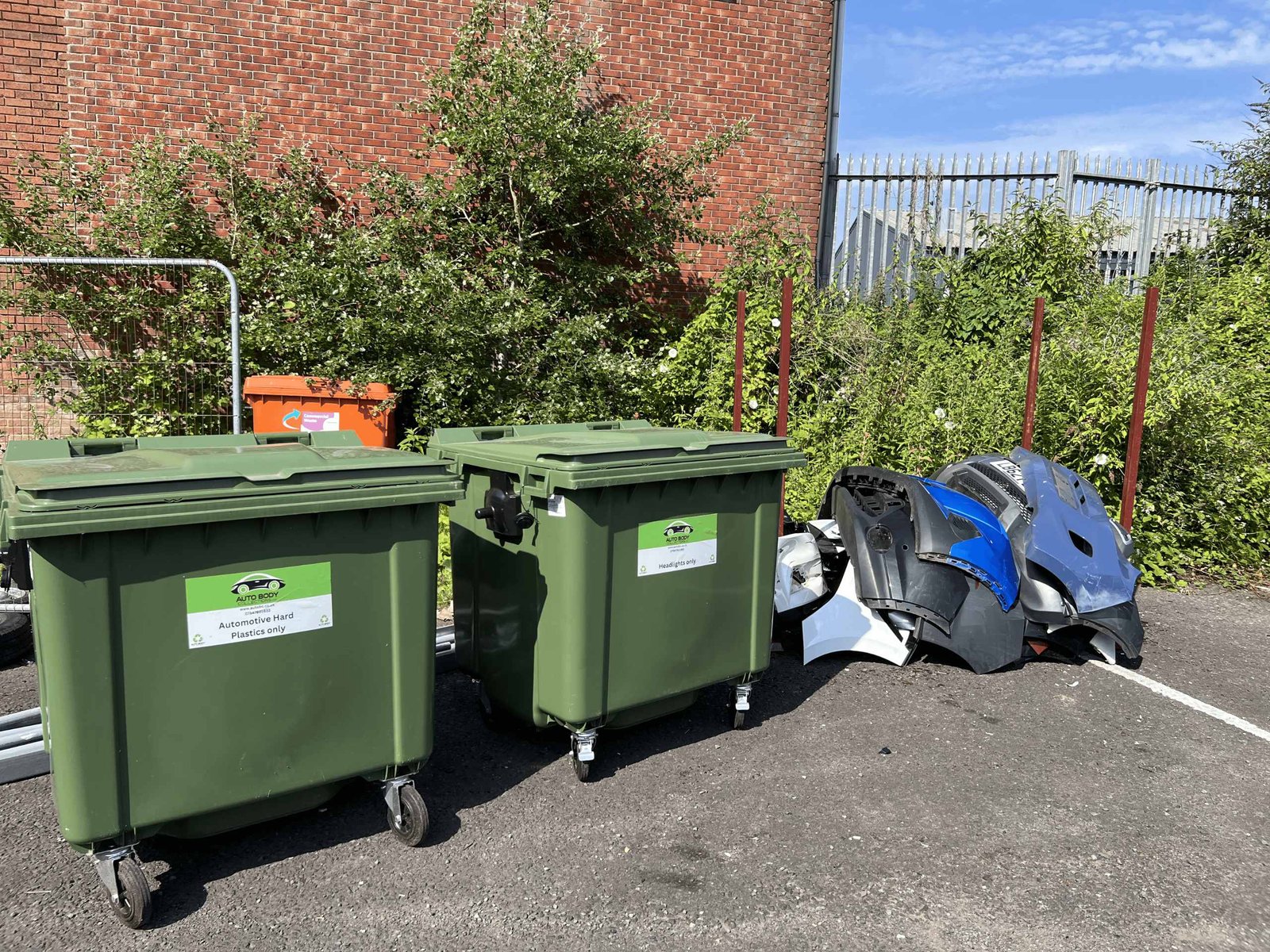
Service Overview
Waste bins and stillage providing services for the automotive sector involve the supply, positioning, and managed collection of purpose-built containers – designed specifically to hold car bumpers, alloy wheels, hard plastics, and mixed workshop waste safely, compliantly, and efficiently.
At Auto Body Collections Ltd, we supply durable bins and stillages to bodyshops, accident repair centres, salvage yards, and automotive workshops across England and Scotland. Every container we provide is matched to your specific waste stream, positioned correctly on your site, and backed by fully compliant waste transfer note documentation on every collection.
This is not a generic commercial waste arrangement adapted for automotive use. It is a service built from the ground up for the bodyshop and workshop environment.
What Are Waste Bins and Stillage Providing Services?
Waste bin and stillage providing is the supply of industrial-grade containers – including mesh cages, solid-sided bins, and stackable stillages – matched to specific automotive waste streams such as bumpers, plastics, alloy wheels, and mixed workshop materials, combined with a managed collection service that keeps your site compliant and clear.
For any bodyshop or automotive workshop operating in the UK, a properly structured container arrangement covers three non-negotiable areas:
- The right container for each waste stream on your site – sized correctly, positioned accessibly, and labelled in line with the 2024 Separation of Waste (England) Regulations.
- A reliable collection process – either scheduled or on demand – with a licensed carrier managing every movement.
- Full compliance documentation – waste transfer notes issued for every single collection, retained for the two-year minimum required by Section 34 of the Environmental Protection Act 1990.
Without all three in place, your business carries unnecessary legal and financial exposure. The Environment Agency’s waste sector prosecutions in 2024 alone resulted in total fines of around £320,000 and 37 custodial sentences. The standard landfill tax rate from April 2025 now stands at £126.15 per tonne, rising to £130.75 from April 2026. Waste that is incorrectly stored, poorly segregated, or handled without documentation becomes expensive very quickly.
The right container arrangement prevents that from the moment the first bin lands on your site.
Waste Bins and Stillages We Supply for Automotive Businesses
Every container we provide is workshop-ready – built to handle the physical demands of a busy bodyshop or repair centre, safe to use with standard forklift and pallet truck equipment, and selected for compatibility with your specific waste output.
Stillages for Automotive Waste
A stillage is a rigid, reusable steel container designed for the safe storage, movement, and collection of heavy or bulky automotive materials. Unlike basic wheeled bins, stillages are built for repeated handling, stackable when empty to save floor space, and compatible with forklift equipment where sites require mechanical handling.
We supply the following stillage types for automotive applications:
- Bumper stillages – purpose-designed with sufficient internal dimensions to hold car bumpers upright or stacked without compression damage. These feed directly into our car bumper collection service, providing a clean, documented collection chain from your workshop to the recycling facility.
- Alloy wheel stillages – mesh-sided or solid-sided cages with weight ratings matched to the dense loads that alloy wheels generate. Connected to our alloy wheel collection service for straightforward, regular removal.
- Hard plastic component stillages – suitable for dashboards, wheel arch liners, grilles, door cappings, and other trim pieces. These support our automotive hard plastic collection service, ensuring plastic waste reaches specialist recycling facilities rather than general landfill.
- Mixed automotive component cages – open mesh construction for visual identification of contents, used where multiple component types are consolidated before collection.
- Collapsible stillages – fold flat when empty, reducing the footprint of stored empty containers by up to 75%. Ideal for smaller bodyshops with limited yard or storage space.
Waste Bins for Automotive Workshops
Waste bins for the automotive sector range from 240-litre wheeled containers for general workshop waste through to 1,100-litre four-wheeled euro containers for higher-volume material streams.
The bins we provide cover the following applications:
- 240-litre wheeled bins – suited to light workshop consumables, masking materials, sandpaper, and general non-recyclable waste.
- 660-litre wheeled bins – appropriate for mid-volume streams including plastic film, packaging materials, and light trim offcuts.
- 1,100-litre euro containers – the standard choice for busier bodyshops generating significant volumes of bumper fragments, hard plastic offcuts, and cardboard packaging from repair parts.
- Solid-sided bins with lids – for waste streams that must be fully contained, including fine grinding dust, composite material offcuts, and any moisture-sensitive materials.
What We Match Each Container To
Automotive Waste Stream | Recommended Container | Connected Service |
Car bumpers | Bumper stillage | |
Alloy wheels | Weight-rated mesh cage | |
Hard plastics and trim | Solid-sided bin or cage stillage | |
Mixed automotive plastics | 1,100-litre wheeled bin | |
General workshop waste | 240-litre or 660-litre wheeled bin | General collection |
Mixed components | Open mesh cage stillage | Combined collection |
How Our Waste Bin and Stillage Service Works
Our service runs as a complete, managed process from initial contact through to ongoing collection. You do not need to manage separate suppliers for containers and waste removal – we handle both as a single, integrated arrangement.
Step 1 – Tell Us What You Need
Contact our team through the request a pickup form with the basics: your site location, the type of automotive waste you generate, and an estimate of your weekly volume. We cover all major areas across England and Scotland.
Step 2 – We Assess and Specify
Based on your requirements, we identify the correct container type, size, and number of units for each waste stream on your site. For bodyshops generating multiple waste streams – bumpers, hard plastics, alloys, and general workshop waste – we specify separate, clearly labelled containers for each material.
This matching process matters because:
- Contaminated recyclable streams are rejected at recycling facilities and reclassified as residual waste, attracting the full landfill tax rate.
- Incorrectly sized containers create overflow, manual handling risks, and missed collections.
- Unlabelled or mislabelled containers create gaps in your waste transfer note documentation chain, leaving you exposed under the duty of care legislation.
Step 3 – We Deliver and Position
We deliver your containers directly to your site and position them where they need to be – not dropped at the gate and left. Every container is:
- Correctly labelled with the waste stream designation in line with current regulations.
- Positioned for access by both your workshop team and our collection vehicle.
- Recorded by container identification number for waste transfer note purposes.
Step 4 – Regular or On-Demand Collection
We collect your full containers on either a scheduled basis (agreed day and frequency) or an on-demand basis (you contact us when the container is full). For most bodyshops, a flexible arrangement works best – bumper and plastic waste volumes vary week to week depending on throughput, and fixed-schedule collections generate unnecessary vehicle movements when containers are not full.
When we collect, we either empty and return the container or replace it with a fresh unit, depending on your service arrangement.
Step 5 – Full Waste Transfer Note Documentation
Every collection generates a waste transfer note in full compliance with Section 34 of the Environmental Protection Act 1990. The note covers:
- Written description of the waste collected, including type and physical form.
- The container identification for the specific unit collected.
- Our waste carrier registration details.
- Your business details as the waste producer.
- Date and location of transfer.
You retain your copy. We retain ours. Both are held for the minimum two-year period required by law. If the Environment Agency requests documentation, it is ready.
Why Automotive Businesses Need Sector-Specific Container Solutions
Most commercial waste providers supply generic bins and offer general collections. That approach creates specific problems for bodyshops and automotive workshops that a sector-specialist arrangement resolves.
The Problem With Generic Waste Containers in a Bodyshop
Generic commercial bins are not designed for the physical characteristics of automotive waste:
- Car bumpers are large, irregular, and bulky. A standard 1,100-litre wheeled bin is not deep enough or wide enough to hold bumpers without forcing them in at angles that compromise structural integrity and make collection difficult. A purpose-built bumper stillage holds bumpers upright or stacked, maximising storage density and protecting the material before collection.
- Alloy wheels are heavy and dense. A collection of alloy wheels in an undersized or incorrectly rated container creates a serious overloading risk. Weight-rated stillages with documented safe working loads (SWL) are the correct specification for this stream.
- Hard plastics and trim are light but bulky. Compressing them into general waste bins mixes recyclable plastic with non-recyclable waste, destroying the recycling value and potentially triggering a contaminated-load rejection on collection.
- Mixed workshop waste must stay separate. PPE, masking materials, grinding dust, and general consumables must not contaminate the recyclable streams. Dedicated, clearly labelled containers for each stream are the only reliable way to maintain separation.
What a Properly Structured Container Arrangement Delivers
When container supply is matched to your specific automotive waste streams and connected to a compliant collection service:
- Your recycling diversion rate increases – clean, separated streams achieve recycling value rather than landfill disposal.
- Your compliance documentation is complete – waste transfer notes cover every movement, satisfying your duty of care under the Environmental Protection Act 1990.
- Your site stays organised – containers are correctly sized, correctly positioned, and collected before overflow becomes a problem.
- Your staff segregate correctly – clearly labelled, dedicated containers remove ambiguity and reduce mis-sorting incidents.
- Your H&S exposure decreases – correctly rated, properly maintained containers reduce manual handling risk and eliminate the PUWER compliance gap that comes with unknown-specification containers.
The Automotive Waste Streams We Handle
Our container supply and collection service covers the full range of automotive waste generated by bodyshops, repair centres, dismantlers, and workshops across the UK.
Car Bumpers
Car bumpers are the highest-volume plastic waste stream in most active bodyshops. They are bulky, lightweight relative to their size, and commercially valuable as a recyclable plastic – but only when kept clean and separate from other waste.
We supply dedicated bumper stillages that:
- Hold bumpers securely without compression damage.
- Allow loading from the top or side depending on the stillage design.
- Connect directly to our car bumper collection service, which routes collected material to specialist processing facilities.
- Generate full waste transfer note documentation on every collection visit.
See our car bumper recycling service for details on how bumper material is processed and recycled once collected.
Automotive Hard Plastics
Hard plastic trim components – wheel arch liners, dashboards, door cappings, grilles, under-trays, and crash panels – accumulate rapidly on busy repair sites. When mixed with general waste, they attract landfill disposal costs unnecessarily. When correctly segregated, they have recycling value.
We supply solid-sided bins and cage stillages for hard plastic collections, connected to our automotive hard plastic collection service. Collected material is processed through our automotive plastic recycling programme, where materials are sorted and directed to specialist recycling facilities.
Alloy Wheels
Alloy wheels require containers rated to their actual loaded weight. A cage of mixed alloy wheels can weigh several hundred kilograms – a figure that must fall within the container’s documented safe working load.
We supply weight-rated stillages and mesh cages for alloy wheel storage, connected to our alloy wheel collection service for regular or on-demand removal.
Mixed Automotive Components and Workshop Waste
Not all automotive waste fits neatly into a single material category. Mixed components, workshop consumables, and general repair materials require appropriately sized general waste containers managed as a separate stream from recyclable materials.
We provide wheeled bins and solid-sided containers for mixed workshop waste, maintained as a distinct stream from the recyclable automotive materials in bumper, plastic, and alloy stillages.
UK Compliance: What Every Bodyshop Must Get Right
The 2024 Separation of Waste (England) Regulations
The 2024 Separation of Waste (England) Regulations, which came into force on 31 March 2025, require businesses in England to separate the following streams at source:
- Dry mixed recyclables – paper, card, plastic, glass, and metal must have dedicated containers separate from residual waste.
- Food waste – must be held in a separate container and not mixed with other materials.
- Residual waste – general, non-recyclable material kept separate from all recyclable streams.
For bodyshops, this means that bumpers, hard plastics, and metal components must be in their own containers, clearly labelled, and collected separately from general workshop waste. Businesses that fail to separate streams correctly face fines of up to £5,000 per breach.
Waste Duty of Care: Your Legal Obligation as a Waste Producer
Under Section 34 of the Environmental Protection Act 1990, your business has a legal duty of care as a waste producer. This requires:
- Transferring waste only to a licensed waste carrier with a valid Environment Agency registration.
- Providing an accurate written description of the waste to the carrier on every movement.
- Retaining waste transfer notes for every collection for a minimum of two years.
- Ensuring containers are in good structural condition so that waste cannot escape before collection.
There is no upper limit on the fine that courts can impose for conviction of a duty of care breach. Selecting a provider who handles this documentation automatically – as we do at Auto Body Collections Ltd – removes the compliance burden from your team entirely.
PUWER 1998: Health and Safety Obligations for Container Users
The Provision and Use of Work Equipment Regulations 1998 (PUWER) classifies stillages and waste bins as work equipment. Under Regulation 6, they must be:
- Safe for use and maintained in a safe condition.
- Inspected before first use where safety depends on installation conditions.
- Inspected at suitable intervals by a competent person.
- Used only by personnel with adequate training and information.
Every container we supply carries its Safe Working Load (SWL) rating clearly marked. The SWL represents the maximum total weight the container can carry, including its own tare (empty) weight. It must never be exceeded – including in stacked configurations.
Who We Serve Across England and Scotland
Our waste bin and stillage service is available to all types of automotive businesses generating bodyshop, repair, and workshop waste across the UK.
We currently provide containers and collections for:
- Bodyshops and accident repair centres – including franchise and independent operators dealing with bumpers, plastics, trim, and mixed workshop materials.
- Vehicle dismantlers and salvage yards – where multiple distinct waste streams must be segregated and documented separately.
- Automotive workshops and dealerships – including franchised dealer groups and independent mechanical workshops generating hard plastics, metals, and general workshop waste.
- Fleet management and maintenance centres – high-throughput operations requiring reliable, scheduled collection to prevent site accumulation.
- Automotive recycling and salvage sites – where efficient container management directly affects processing throughput and compliance record-keeping.
We serve all major areas across England and Scotland, from large cities to smaller towns and trading estates. Our scheduling flexibility means collections fit around your workshop hours, not the other way around.
What Makes Our Service Different From Generic Waste Providers
Several commercial waste providers supply bins and offer collections. Here is what separates an automotive-specialist approach from a generic arrangement.
We Understand Automotive Waste Streams
Generic waste companies apply the same container range to every commercial client. We select containers specifically for automotive waste – bumper dimensions, alloy wheel density, hard plastic bulk, and mixed workshop material characteristics all influence the container type and size we recommend.
We Connect Containers to Recycling Outcomes
Our bins and stillages are not just storage – they are the first step in a documented recycling chain. When your bumper stillage is collected, those bumpers go to specialist processing. When your plastic bin is collected, that material goes through the automotive plastic recycling programme. The container is the starting point, not the end point.
We Provide Documentation on Every Collection
Waste transfer notes are not produced on request or issued retrospectively. We provide them on every single collection as a standard part of the service. This satisfies your two-year retention obligation and gives you a complete, auditable record of every waste movement from your site.
We Cover Nationwide Without Sacrificing Reliability
Our service covers all major areas across England and Scotland. Coverage is backed by a scheduling process that confirms collection times in advance and maintains consistency, so your site is not subject to missed collections or unexplained delays. Learn more about why automotive businesses choose us and how we maintain service standards across our coverage area.
Sustainability and the Circular Economy in Automotive Waste
For automotive businesses with sustainability commitments – whether driven by OEM requirements, insurance network standards, or internal environmental targets – the container programme is part of the evidence base.
Reusable Steel Containers Support Circular Economy Goals
Steel stillages have a service life of 15 to 25 years when properly maintained. Over that lifespan, they replace dozens of single-use packaging equivalents – each of which carries an embodied carbon cost in manufacture and disposal. At end of life, a steel container retains scrap metal value and enters the recycled steel supply chain rather than landfill disposal.
Unlike plastic alternatives, a steel container never becomes a disposal liability. Its end-of-life value is positive.
Clean Segregation Reduces Your Landfill Tax Exposure
The current UK standard landfill tax rate is £126.15 per tonne (April 2025), rising to £130.75 from April 2026. Every tonne of recyclable material that ends up in a contaminated general waste container – because the wrong bin was in the wrong place – attracts that rate unnecessarily.
Clean, segregated automotive plastics, metals, and bumper materials all have recycling value. Routing them through correctly labelled, dedicated containers and a compliant collection chain keeps them out of the landfill stream entirely.
Your Waste Data Supports ESG Reporting
Collection data from your waste transfer notes – material type, volume, disposal route, collection frequency – provides the quantified waste data required for Scope 3 Category 5 emissions reporting under the GHG Protocol. Businesses seeking ISO 14001 certification or responding to customer sustainability questionnaires can use this data as direct evidence of their waste management performance.
Frequently Asked Questions
A stillage is a rigid, reusable steel container built for the storage and handling of bulky industrial materials. In a bodyshop, stillages are used to store car bumpers, alloy wheels, hard plastic trim, and other automotive components between workshop operations and waste collection. They are designed for forklift or pallet truck handling and stack flat when empty to save floor space.
A waste bin is typically a wheeled or static container for general or mixed waste, most often emptied by a tipper mechanism on a collection lorry. A stillage is a heavier-duty, reusable cage or frame structure built for specific materials – usually automotive components, metal, or bulky plastics – handled by forklift or pallet truck. Stillages are more durable, reusable over a longer service life, and appropriate where the material being stored is heavy, bulky, or must be kept separate for recycling.
Bodyshops in England must now maintain separate containers for dry mixed recyclables (plastic, metal, paper, card, and glass), food waste where generated, and residual waste – as required by the 2024 Separation of Waste (England) Regulations. In addition to these mandatory separations, most bodyshops need dedicated containers for car bumpers, hard plastic trim, and alloy wheels to support automotive-specific recycling programmes and avoid contamination of recyclable streams.
Yes. A waste transfer note is a legal requirement for every movement of non-hazardous controlled waste under Section 34 of the Environmental Protection Act 1990. It must include a description of the waste, the container type, and the verified details of both the waste producer and the licensed carrier. Notes must be retained for a minimum of two years and produced on request by the Environment Agency or local authority.
Collection frequency should match your actual waste generation rate. An overfull container creates safety hazards, compliance risks, and potential contamination. An under-filled container on a fixed-schedule collection wastes collection resource unnecessarily. Demand-triggered collections – where you request collection when a container reaches capacity – typically work better for bodyshops than fixed weekly schedules, as bumper and plastic waste volumes vary with workshop throughput. We offer both scheduled and flexible on-demand collection options.
Yes. We provide containers on both a short-term and long-term basis depending on your business requirements. Long-term supply suits established bodyshops with consistent waste volumes. Short-term arrangements suit temporary facilities, pop-up repair operations, or businesses trialling a new waste stream separation approach before committing to a full programme.
Yes. Stillages are classified as work equipment under the Provision and Use of Work Equipment Regulations 1998 (PUWER). This means they must be maintained in a safe condition, carry a clearly visible Safe Working Load (SWL) marking, be inspected at appropriate intervals by a competent person, and be used only by trained staff. Written inspection records must be maintained. Every container we supply carries its SWL documentation as standard.
Contact our team directly to arrange an additional or early collection. You should not allow a container to overflow – an overflowing bin creates a manual handling risk, a contamination risk for the surrounding area, and a potential duty of care compliance issue if waste escapes from the container. We provide responsive, flexible collections to prevent overflow becoming a site management problem.
Yes. Every container we supply is appropriate for the waste stream it is specified for, carries SWL documentation in line with PUWER requirements, and is labelled correctly to satisfy the 2024 Separation of Waste (England) Regulations. Our collection service provides full waste transfer note documentation on every collection, satisfying your duty of care under Section 34 of the Environmental Protection Act 1990.
We provide waste bin and stillage services across UK, supporting bodyshops, workshops, dismantlers, and automotive sites in all major cities, towns, and trading estate locations. To confirm coverage for your specific site, contact our team with your postcode and requirements.
Keep Your Site
Organised & Compliant
Improve waste handling, reduce clutter and manage
materials safely with professional bin and stillage supply.
Request Waste Bins or Stillage Today