
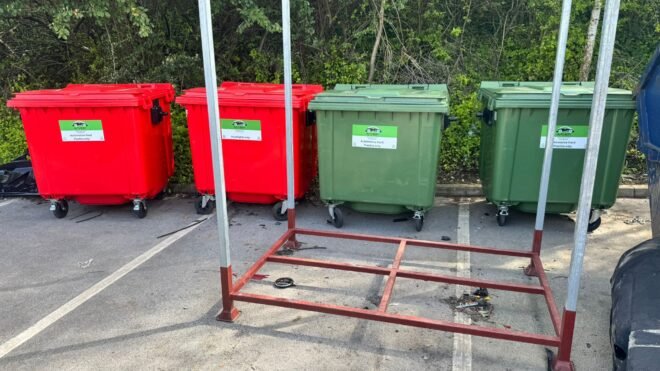
Walk onto any UK bodyshop floor on a busy Tuesday morning and the same problem tends to be playing out in a dozen different ways. A technician is stepping around a half-full skip to reach the spray booth. A pile of cracked bumpers is stacked against a wall because the cage that used to hold them is already overflowing. A stillage of scrap alloy wheels is blocking the path a forklift needs to take.
Why the Container You Choose Actually Matters
Automotive bodyshop waste is not one waste stream. It behaves differently depending on weight, shape, and whether it retains recycling or scrap value once separated.
A typical bodyshop generates:
- Non-hazardous solid waste — plastic bumpers, trim panels, packaging, and general workshop debris.
- Metal waste — scrap panels, alloy wheels, exhaust sections, and other ferrous and non-ferrous offcuts.
- Hazardous waste — used oil filters, contaminated rags, aerosols, and residues from paint and body filler.
- Bulky, awkward-shaped waste — cracked bumpers, dented doors, and damaged glass that does not stack neatly.
Matching the container to the waste stream is not pedantic. It is the difference between a site that passes an Environment Agency inspection without a second thought and one flagged for poor waste segregation. It is also, in a very direct way, a cost decision: mixed loads typically attract higher gate fees, while properly separated metal often retains scrap value.
What Is a Stillage?
A stillage is a steel-framed container, usually with a solid base and raised feet, designed to hold and transport heavy or dense goods safely by forklift or pallet truck.
In a bodyshop, a stillage is typically the right choice for:
- Scrap alloy wheels, which are heavy, awkwardly shaped, and prone to rolling if left loose.
- Metal offcuts and panel sections from bodywork repairs.
- Engine and mechanical components removed during accident repair work.
- Segregated recyclable metal that needs to stay clean and uncontaminated by other waste streams.
Stillages are built for weight rather than volume, and most designs stack when empty, which matters on sites where floor space is already tight. Our waste bins and stillage provision service is built around matching stillage size and placement to a workshop’s actual metal waste output, rather than a generic template.
What Is a Cage?
A cage, sometimes called a mesh cage or pallet cage, is a wire-mesh-sided container designed for goods that need visibility, ventilation, or protection from being crushed.
A cage is generally the better choice for:
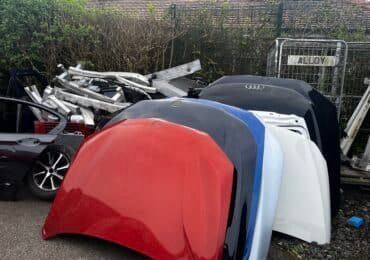
- Cracked or damaged bumpers and plastic trim that need to stay separate from general waste for recycling.
- Bulky but lightweight components that would waste volume in a stillage but are too awkward for loose skip disposal.
- Parts awaiting inspection or sorting, since mesh sides let staff see contents without opening the container.
- Glass and light trim waste, where visibility helps avoid contamination with the wrong material.
Bumper waste is consistently where cages outperform skips. Thrown into a skip, bumpers are crushed under subsequent loads, which complicates recycling. Kept in a cage, they stay intact. If bumper waste is a significant part of a site’s output, our dedicated bumper collection service is built specifically around this kind of segregated, cage-based collection.
What Is a Skip?
A skip is an open-topped, solid-sided steel container, usually delivered and collected by a specialist waste vehicle, designed to take large volumes of mixed or general waste.
A skip is generally the right call for:
- General workshop waste, including packaging, cardboard, and non-recyclable offcuts.
- Large volumes of mixed material where segregation into stillages or cages is not practical.
- Bulky, non-recyclable waste that does not fit the profile of stillage or cage material.
A skip may need a council permit if it sits on a public road rather than private premises, and it is generally less suited to high-value recyclable material, since everything inside it mixes together and forfeits its individual scrap or recycling value.
Stillage vs Cage vs Skip: A Direct Comparison
| Factor | Stillage | Cage | Skip |
|---|---|---|---|
| Best for | Heavy, dense metal waste | Bulky, lightweight, sortable waste | Large volumes of general/mixed waste |
| Visibility of contents | Limited | High (full mesh sides) | Low |
| Protects contents from crushing | Yes | Yes | No |
| Movement around site | Forklift/pallet truck | Forklift/pallet truck or manual | Static; moved by specialist vehicle |
| Recycling value retained | High | High | Low |
| Typical bodyshop use case | Alloy wheels, panel offcuts | Bumpers, trim, glass | General rubbish, packaging |
Matching the Container to Specific Bodyshop Waste Streams
Plastic Bumpers and Trim
Bumpers and plastic trim panels are one of the highest-volume waste streams in any accident repair centre.
- Cracked or damaged bumpers destined for recycling belong in a cage, not a skip.
- Bumper offcuts from repair or refinishing work can often join the same cage, though different plastic grades may need separating.
- A steady volume of bumper waste is usually better served by a scheduled collection tied to workshop throughput than by ad-hoc skip swaps, which is covered in more detail in how bumper collection scheduling adapts around your workshop workflow.
Scrap Metal and Alloy Wheels
Steel and aluminium offcuts, along with scrap alloy wheels, are textbook stillage material.
- Ferrous and non-ferrous metal should be kept separate where possible, since mixed scrap is worth less than properly sorted metal.
- Metal offcuts thrown into general skip waste are one of the most common ways bodyshops unknowingly give away value.
- Alloy wheels retain real scrap value even when damaged, and that value is only realised when they are kept separate from mixed waste. More detail on the process is covered in what happens to scrap alloy wheels after they are collected.
Used Oil Filters and Fluid-Contaminated Waste
This is where the stillage-vs-cage-vs-skip decision becomes a legal compliance question rather than an efficiency one.
- Used oil filters, oily rags, and fluid-contaminated materials are classified as hazardous waste and cannot go in a general skip.
- Hazardous waste requires dedicated, clearly labelled containers and collection by a registered hazardous waste carrier.
- Mixing hazardous waste into a general skip is one of the most serious compliance failures seen on bodyshop sites, and also one of the easiest to prevent with the right container in place.
General Workshop Waste
Packaging, cardboard, non-recyclable offcuts, and everyday site rubbish are the one category where a skip is genuinely the most practical option.
- There is little to gain from segregating this waste further, since it carries minimal recycling value.
- The main decision is skip size and collection frequency, matched to actual waste generation rather than guesswork.
- Even general waste benefits from being kept clear of recyclable material accidentally dumped into it out of convenience.
UK Compliance Requirements You Cannot Ignore
Every UK business, including bodyshops, holds a legal Duty of Care for the waste it produces. In practice, this means:
- Waste must be stored in a way that prevents it escaping or causing environmental harm.
- Hazardous waste must be kept separate from non-hazardous waste at all times.
- Collections must use a registered waste carrier, with evidence of registration available if requested.
- Waste transfer notes and hazardous waste consignment notes must be retained for the required minimum periods.
- The End-of-Life Vehicles (ELV) Directive and WEEE regulations can apply to certain components handled during repair work, including sensors and control units, which should not automatically be treated as general metal scrap.
Bodyshops that get caught out during inspections are rarely cutting corners deliberately. More often, hazardous and non-hazardous waste end up in the same skip simply because no separate container was ever set up. A full breakdown of how UK environmental law applies to automotive waste producers is covered inUK environmental law and automotive waste.
Space, Cost, and Site Logistics
Compliance gets most of the attention, but the practical realities of running a workshop matter just as much.
- Floor space is always tighter than expected. Stillages and cages have a smaller footprint than a skip and often stack when empty.
- Positioning matters more than most sites realise. Containers placed near the point of waste generation are used correctly far more consistently than containers left at the yard’s edge for delivery convenience.
- Collection frequency should match actual output. A skip collected weekly regardless of fill level wastes money during quiet periods and risks overflow during busy ones.
- Segregated material can offset costs. Clean metal or plastic kept apart from general waste frequently reduces overall disposal spend compared with a single mixed skip.
Health and Safety Considerations
Container choice is a workplace safety decision as much as a waste management one.
- Correctly positioned stillages and cages keep sharp or heavy waste out of walkways where it would otherwise pose a trip or impact hazard.
- Overfilled skips create a falling-object risk, particularly once staff continue piling waste on top of an already-full container.
- Glass and sharp trim waste should never be handled loose, and a cage’s visibility means staff can see what they are reaching into.
- Hazardous waste containers should be clearly labelled and positioned away from general foot traffic, in line with existing COSHH documentation covering paints and solvents.
Building a Container Strategy
Rather than treating stillage, cage, and skip as three separate purchasing decisions, they work best as one coordinated system.
- Map actual waste streams by walking the site and noting what is genuinely generated, rather than assuming a generic bodyshop profile.
- Assign each stream to the right container type — heavy metal to a stillage, bulky sortable material to a cage, genuinely mixed general waste to a skip, and hazardous waste to its own dedicated, labelled container.
- Position containers at the point of generation, since the distance staff have to walk is the single biggest factor in whether the right container gets used.
- Match collection frequency to output, rather than defaulting to a fixed weekly skip collection out of habit.
- Review periodically, since a busy season or a new service line can shift a site’s waste profile without anyone updating the container setup to match.
Sites that would rather have this mapped out professionally than work through it alone can arrange this as part of a waste bins and stillage provision assessment, matched to actual output rather than a one-size-fits-all setup.
Common Mistakes Bodyshops Make
The same handful of mistakes appear repeatedly across bodyshop sites:
- Using a single general skip for everything, which is simple on day one and the most expensive option over a year.
- Letting hazardous and non-hazardous waste share space, usually because no dedicated container was ever set up.
- Positioning containers for delivery convenience rather than staff convenience, which quietly trains people to use the nearest container rather than the correct one.
- Sticking to a fixed collection schedule regardless of actual output, leading to overflow or wasted fees.
- Treating damaged parts as pure rubbish, when cracked bumpers and dented alloy wheels retain real recycling and scrap value once properly segregated.
Bringing It Together
There is no single best container for bodyshop waste, because bodyshop waste is not a single thing. Matching each stream to the container built for it produces measurable results:
- Cleaner compliance records and fewer flagged issues at inspection.
- Safer walkways with less loose or overflowing waste.
- Lower overall disposal costs once recyclable material stops being buried in mixed skip loads.
- Recyclable metal and plastic actually recovered, rather than landfilled by default.
Anyone unsure how their current setup measures up can walk their own site against this framework, or arrange a second opinion. That kind of assessment is exactly what our team carries out for bodyshops across the UK, and it is usually the fastest way to spot where a container swap could save money or close a compliance gap. Get in touch with our team via the Auto Body Collections contact page to discuss what a specific site actually needs.
Frequently Asked Questions
What is the main difference between a stillage and a cage?
A stillage is built for heavier, denser waste such as scrap metal or alloy wheels, with solid or part-mesh sides suited to forklift handling. A cage has full mesh sides for visibility and suits bulkier but lighter waste such as cracked bumpers and trim.
Can scrap metal and plastic bumpers go in the same container?
This is not recommended, since mixing metal with plastic waste contaminates both streams and reduces their recycling value. Metal belongs in a stillage, while bumpers and trim belong in a separate cage.
Does a skip need a permit at a bodyshop?
A permit is generally not required if the skip sits entirely on private premises. If it needs to sit on a public road or pavement, a council permit is typically required before delivery.
Can oil filters go in a general skip?
No. Used oil filters and other fluid-contaminated materials are classified as hazardous waste and must be stored in dedicated, labelled containers, collected by a registered hazardous waste carrier.
How does a bodyshop know whether it needs a stillage, cage, or skip?
The decision depends on the waste stream. Heavy, dense, recyclable metal suits a stillage, bulky sortable waste such as bumpers suits a cage, and genuinely mixed general waste suits a skip. Most bodyshops need all three.
Does segregating waste into different containers save money?
In most cases, yes. Mixed general waste in a skip is typically charged at a higher rate, while segregated recyclable metal or plastic retains value or costs less to process.
What happens to scrap alloy wheels once collected from a bodyshop?
Collected wheels are typically sorted by alloy grade, assessed for reusability, and either processed for scrap aluminium recycling or refurbished for resale where viable.
How often should bodyshop waste containers be collected?
Collection frequency should reflect actual waste generation rather than a fixed schedule. High-output streams such as bumper waste may need frequent, scheduled collections, while lower-volume streams such as alloy wheels may need less frequent but carefully tracked collections.
[…] Keep tyres in their own container or cage. […]
[…] Waste storage is also a workplace safety matter. Three sets of rules apply: […]